Mold usually shows up after water does. A leak behind a wall, a damp basement, or a storm that got into the attic can leave materials wet long enough for mold to take hold, and it often grows out of sight. A musty smell with nothing visible, a spot that keeps coming back after cleaning, or family members who feel worse indoors are all reasons to have someone look.
A mold inspection finds where the moisture is and where mold is growing. Testing tells you what kind it is and how much is in the air or on a surface. Together they give you a clear picture before you spend money on removal.
If you suspect mold in your home or building, call Grand Rapids MI Water Damage at (616) 588-9420 and our On-Call team will set up an inspection.
What Our Mold Inspection and Testing Includes
Walkthrough and questions. We start by talking through what you have noticed: smells, stains, recent leaks, past water damage, or symptoms that seem to ease when you leave the house. Then we check the areas most likely to hold mold, including basements, attics, crawl spaces, bathrooms, and around HVAC equipment.
Moisture readings. Mold needs moisture to grow, so finding the water source matters as much as finding the mold. Moisture meters and thermal imaging help us locate damp materials and hidden leaks that are not visible on the surface.
Air sampling. Air samples show the mold spores present in a room compared with the outdoors and other areas of the building. They are useful when mold is suspected but cannot be seen.
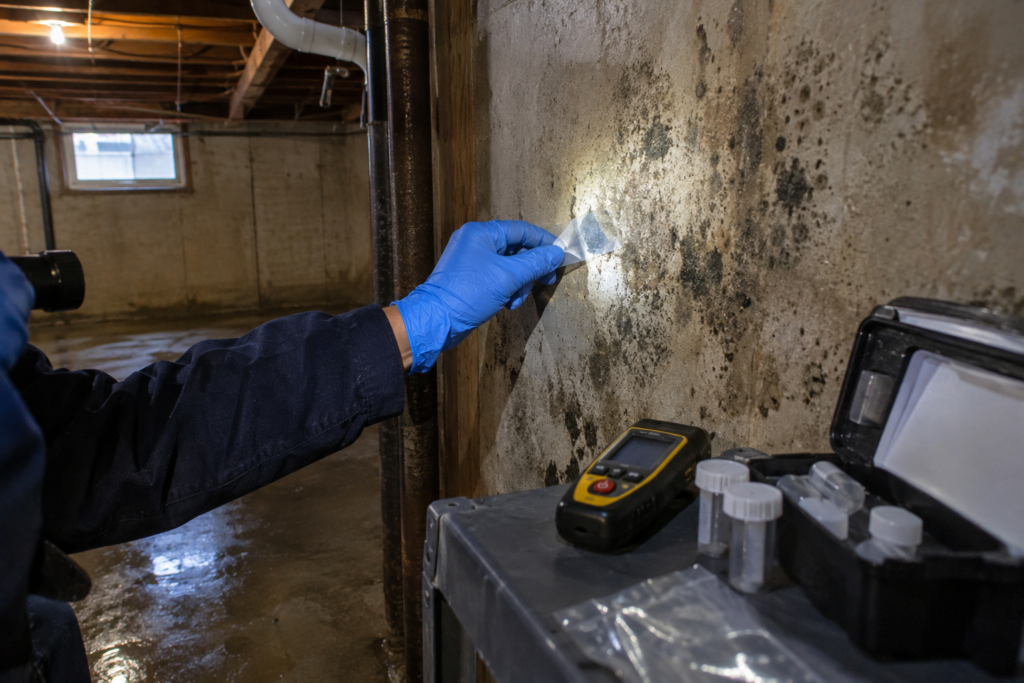
Surface sampling. When there is visible growth, swab or tape samples from the affected surface help identify what it is.
Lab analysis. Samples go to a laboratory, which reports the types and amounts of mold found. That gives your written report something firmer to stand on than a visual guess.
Written report and next steps. You receive the findings, the moisture readings, and a recommended plan. If remediation is needed, the report points to the areas that need work.
An inspection is mostly non-invasive. If we need to open a small section of wall or ceiling to check behind it, we explain why and get your approval first.
When Mold Testing Makes Sense
Testing is not always the first step, and we will tell you if it is not needed. Visible mold in a known damp area usually calls for fixing the moisture and removing the growth, whether or not you know its exact species. Testing is most useful in situations like these:
- You smell mold but cannot find it
- Someone in the home has symptoms and you want to know if mold could be a factor
- There was water damage and you want to confirm that mold has not spread
- You are buying or selling a property and want to know its condition
- Mold seems to return after cleanup and you need to find out why
Where Mold Hides in Grand Rapids Homes
Freeze-thaw cycles, humid summers, and heavy spring rain mean many local homes have moisture problems somewhere. Basements and crawl spaces are the most common trouble spots, especially where the ground is damp or where a sump pump has failed. If mold is already visible below grade, our basement mold cleanup service covers the removal.
Attics collect moisture from roof leaks and poor ventilation, and bathrooms and kitchens see repeated humidity. Air ducts and HVAC equipment can also spread spores through the building.
Older homes in Alger Heights often have crawl spaces and basements that get damp over time, which makes them worth checking after any leak or flood.
What Happens If We Find Mold
The inspection tells you what you are dealing with. From there, the next step depends on the results. Small, contained areas may be simple to fix, while larger or hidden growth needs proper containment and removal. Our mold remediation services handle removal and address the moisture problem behind it, so the mold does not come back.
Once the work is finished, post-remediation clearance testing checks that the space has actually returned to normal levels.
If Water Damage Caused the Mold
Mold is often the second problem, after a leak, flood, or storm. If the source of the moisture is still unclear, a water damage inspection traces the water back to its origin so both problems can be dealt with together.
Serving Homes and Businesses Across Grand Rapids
We inspect houses, condos, and commercial properties throughout the area. Whether your property is in Eastown or Creston, the process is the same: find the moisture, sample what is growing, and give you a plan you can follow.
Why Choose Grand Rapids MI Water Damage
- Licensed and insured in Michigan
- Straight answers. If testing is not necessary, we will say so
- Clear written reports with moisture readings and photos you can share with your insurer
- Transparent estimates with the scope explained before work begins
- One team from inspection to remediation, so you do not need a separate contractor for each step
Frequently Asked Questions
How do I know if I have mold in my house?
A musty smell, visible spots or staining, peeling paint, and past water damage are common signs. Mold can also grow behind walls and under floors, so an inspection with moisture readings is the reliable way to check.
Is mold testing necessary if I can see the mold?
Not always. If growth is visible in a damp area, the priority is to remove it and fix the moisture. Testing helps when the mold is hidden, when there are health concerns, or when you need documentation.
What is the difference between air testing and surface testing?
Air testing measures the spores floating in a room, while surface testing identifies what is growing on a specific spot. Which one fits depends on what you see and what you suspect.
Do DIY mold test kits work?
They can show that mold spores exist, but spores are present almost everywhere, so a kit alone rarely tells you how serious the problem is or where it is coming from. A professional inspection adds moisture readings and a plan.
Can mold testing help with my insurance claim?
A written report with moisture readings and sampling results documents what was found. Coverage depends on your policy, so ask your insurer what they need.
How much does a mold inspection cost?
It depends on the size of the property and how many samples are needed. Call (616) 588-9420 and we will give you a transparent estimate.
Schedule Your Mold Inspection
Mold gets harder and more expensive to deal with the longer it grows. Call Grand Rapids MI Water Damage at (616) 588-9420 to schedule a mold inspection and get a clear answer about what is in your home.
Nearby Grand Rapids Areas We Serve Mold Inspection & Testing Services
Why Choose Us for Mold Inspection & Testing in Grand Rapids, MI?
Licensed & Insured
Fully protected for your peace of mind
Free Estimates
No obligation quotes
5-Star Rated
Top reviews from customers
Same-Day Service
Quick response times
Need Mold Inspection & Testing Services?
Contact us today for a free estimate. Our experienced team is ready to help!