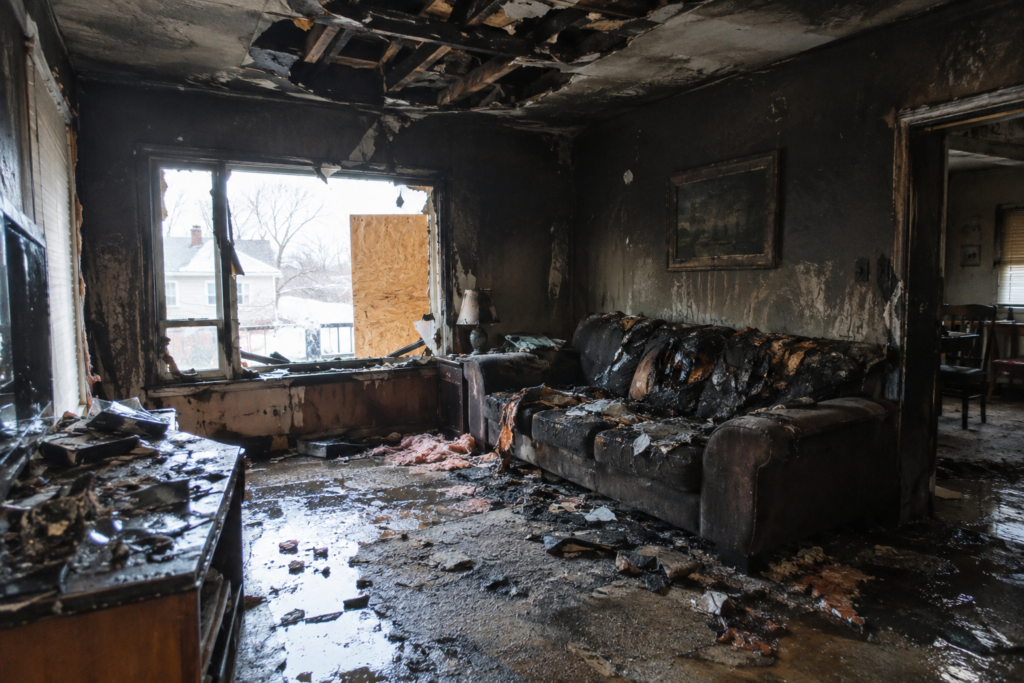
The fire trucks have left, the flames are out, and you are standing outside a home that smells like a wet campfire. Everything feels urgent and nothing feels clear. What you do in the next two days affects how much of your home and belongings can be saved, and how smoothly your insurance claim goes.
Quick answer: In the first 48 hours after a house fire, wait for fire department clearance before entering, secure the property, photograph everything before touching it, call your insurance company, and avoid cleaning soot yourself. Then bring in a restoration team to assess the damage.
Need help right now? Call Grand Rapids MI Water Damage at (616) 588-9420 and our On-Call team will walk you through the next steps.
This guide covers those first two days in order, so you always know what to do next.
Before You Go Back Inside
Do not re-enter the house until the fire department says it is safe. Structures weakened by fire can fail without warning, floors can hide burned-through areas, and the air can carry toxic particles long after the flames are gone.
Ask the fire officer on scene whether the utilities have been shut off and whether the building is stable. Get the fire report number if one is available, because your insurer will ask for it. Once you are cleared to go in, a professional assessment of the fire damage helps you understand what is structural, what is cosmetic, and what can still be saved.
Secure the Property
An open, damaged home invites more problems. Broken windows, burned doors, and a compromised roof let in rain, snow, animals, and people who should not be there. Insurers also expect you to take reasonable steps to prevent further loss.
If you cannot close the house up yourself, a professional board-up covers windows, doors, and open roof sections so the damage does not grow while you sort out everything else.
The steps are the same whether your home is in Cascade or anywhere else in the Grand Rapids area.
Document Everything Before You Touch It
Take photos and video of every room, wall, ceiling, and damaged item before anything gets moved or thrown out. Go slowly and cover the details: the soot lines on walls, melted items, water damage from firefighting, and the contents of closets and cabinets.
Then start a written list of damaged belongings with what you remember about each one: what it was, roughly when you bought it, and what it cost. Receipts and old photos help, and so do phone pictures that show your rooms before the fire.
Do not throw out damaged items until your insurance adjuster has seen them or approved it in writing.
Call Your Insurance Company
Contact your insurer as soon as you can, even if you only have partial information. Ask what your policy covers for repairs, contents, and temporary housing. Fire damage is commonly covered, but the details depend on your policy. Many policies also include additional living expenses if the home is not livable, so keep every receipt for hotels, meals, and laundry.
Write down the name of everyone you speak with, the date, and what was said. Ask what your insurer needs from a restoration company, such as an itemized estimate or documentation of the work.
Do Not Wipe Soot Yourself
A common mistake is trying to scrub soot off walls right away. Soot looks like something that should wipe off, but rubbing it can grind the particles into porous surfaces like painted walls, ceilings, and upholstery, turning a removable stain into a permanent one.
Some safe steps are fine. Open windows for ventilation if the house is secure, throw out food that was exposed to heat or smoke, and move undamaged items to a clean space. Leave walls, ceilings, electronics, and upholstery for professionals with the right cleaning products and equipment.
Kitchen Fires Are Different
Kitchen fires are common and often look smaller than they are. Grease and cooking residue spread through cabinets and vents, and smoke reaches rooms far from the stove. Even a fire that was put out quickly can leave a film on surfaces and a smell in the ductwork.
If the fire started in your kitchen, a cleanup that reaches the hidden areas, not just the visible ones, makes a real difference in the final result.
Why the Smoke Smell Does Not Just Fade
Smoke is a mix of fine particles and gases that settle into drywall, insulation, carpet, and furniture. Air fresheners and open windows only hide the smell for a while. The odor comes back on humid days or when the heat turns on because the source is still in the materials.
Lasting results come from removing the odor at its source: cleaning surfaces, treating the air and materials, and sometimes replacing items that cannot be cleaned.
Water Damage Often Follows a Fire
Fire crews use a lot of water, and it soaks into floors, walls, and ceilings. That moisture can lead to mold if it is not dried properly, sometimes within a couple of days. If you see wet drywall, standing water, or a musty smell after a fire, the drying should start early, alongside the fire cleanup. This applies to homes in Ada just as much as anywhere else.
Common Mistakes to Avoid
Going back in too soon. Wait for the all-clear, even if waiting feels like wasted time.
Cleaning before documenting. Once things are wiped and thrown away, it is harder to show what was there.
Turning on electricity or appliances. Wiring may be damaged and water may be present. Have everything checked first.
Throwing away damaged items without approval. Ask your insurer first.
Hiring the first contractor who knocks on the door. Take a moment to check who you are working with, and ask for a clear written estimate.
Frequently Asked Questions
How soon should restoration start after a fire?
As soon as the fire department clears the building. Soot and moisture cause more damage the longer they sit, so starting within the first couple of days gives you the best chance of saving materials.
Can I stay in my house after a fire?
It depends on the damage. If there is structural damage, no power or heat, or heavy smoke and soot, staying is usually not safe. Ask the fire department and your insurer, and keep receipts if you need temporary housing.
What can be saved after a fire?
In many cases, more than you might expect. Clothing, furniture, and some electronics can often be professionally cleaned, although heavily burned materials usually cannot be saved. An assessment tells you which is which.
Will my insurance cover fire restoration?
Fire damage is commonly covered, but it depends on your policy. Read your coverage carefully and ask your insurer what documentation they need.
Getting Help
A house fire is hard enough without also figuring out the cleanup on your own. The first 48 hours are about keeping people safe, protecting what is left, and starting the right process quickly. We help homeowners across the area, including those in Cutlerville and nearby neighborhoods.
If your home has been damaged by fire, call Grand Rapids MI Water Damage at (616) 588-9420 for a transparent estimate and a clear plan for your situation.
Leave a Reply