Before any water gets extracted, any equipment gets set up, or any repair work starts, there’s a step that decides how the whole rest of the job goes: the assessment. It’s easy to skip past mentally – homeowners usually want to know how fast the water gets removed, not what happens in the twenty minutes before that. But the assessment is where the actual plan gets made, and a rushed or incomplete one is one of the most common reasons water damage restoration goes wrong.
This guide walks through what a proper water damage assessment actually involves, and why it’s worth understanding before you’re standing in a flooded room trying to decide who to call.
Why the Assessment Comes Before Everything Else
Water damage isn’t one problem – it’s several, depending on where the water came from, how contaminated it is, and how long it’s been sitting. A burst supply line behaves completely differently than a sewage backup, even if the amount of standing water looks similar. Skipping straight to extraction without understanding what you’re actually dealing with means treating a black-water contamination the same way you’d treat a clean-water leak, which can leave contamination behind or waste time drying materials that needed to be removed instead.
The assessment is what turns “there’s water in my house” into an actual plan: what needs to be extracted, what needs to be dried, what needs to be removed and replaced, and what needs testing before anyone assumes it’s safe.
Water Categorization: The First Real Decision
Professionals classify water damage into three categories, and this classification drives nearly every decision that follows.
Category 1 (clean water) comes from a source like a broken supply line or an overflowing sink with no contaminants. This is the most straightforward to handle – dry it out properly and the job is largely done.
Category 2 (gray water) contains some contamination – water from a washing machine, dishwasher, or a toilet with no solid waste. It requires more careful handling and often some material removal, not just drying.
Category 3 (black water) is contaminated water – sewage backups, flooding from outside the home, or water that’s been sitting long enough to develop bacterial growth. This category requires the most aggressive response: removal of affected porous materials, full sanitization, and typically no attempt to save materials that would be fine to dry out under Category 1 conditions.
Getting this categorization right at the start is what prevents under-treating a contaminated situation – or over-treating a clean one and spending more than the job actually required.
Finding Water You Can’t See
The water damage that’s visible – the puddle on the floor, the stain on the ceiling – is rarely the whole story. A proper assessment includes checking for moisture that’s traveled somewhere you wouldn’t think to look.
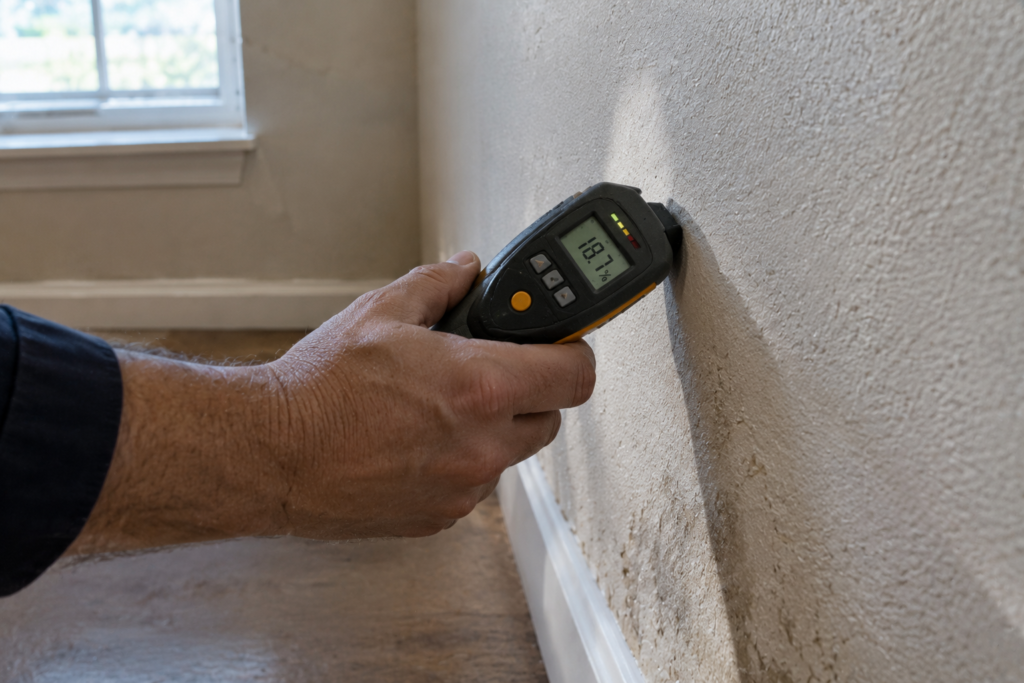
Moisture meters measure the actual moisture content inside materials like drywall, wood framing, and subfloor, rather than relying on how something looks or feels on the surface. A wall can look dry and still be reading well above a safe moisture level underneath the paint.
Thermal imaging cameras detect temperature differences that often indicate moisture, letting a technician scan a wall or ceiling and identify wet areas before cutting into anything. This is especially useful for finding water that’s traveled sideways or upward from the original source – which happens more often than people expect, particularly with roof or ceiling leaks.
Finding this hidden moisture during the assessment, rather than discovering it weeks later as a mold problem, is one of the biggest differences between a thorough job and a rushed one. Our water damage inspection service is built around exactly this kind of detection.
Identifying the Source – Not Just the Symptom
An assessment isn’t just about documenting how much water is present; it’s about figuring out where it came from and whether that source is still active. Water pooling near an exterior wall could be a roof leak, a foundation crack, or grading pushing water toward the house – and the fix is completely different depending on which one it is.
If the source hasn’t been identified and addressed, drying the current damage doesn’t prevent the same problem from happening again during the next heavy rain or the next cold snap.
Documentation for Insurance
A thorough assessment also produces the documentation that matters most if you’re filing an insurance claim: photos, moisture readings, and a written account of the damage’s extent before any cleanup begins. Insurance adjusters need to see the damage, not just hear a description of it after the fact – cleaning up before documenting is one of the most common reasons claims get delayed or reduced. For more on what your insurer specifically needs, see our water damage insurance claim guide.
What Happens After the Assessment
Once the source is identified, the water is categorized, and the extent of the damage is mapped out, the actual restoration plan follows from that information rather than guesswork:
- Extraction removes standing water, with the amount and approach determined by what the assessment found
- Structural drying targets the specific materials and areas the assessment identified as wet — not just the visibly damaged room. Our structural drying and dehumidification service is built around this kind of targeted approach
- Material removal happens where the assessment showed contamination or damage beyond what drying can fix
- Mold prevention or remediation gets planned based on how long the assessment shows the area was wet and what category of water was involved – our mold remediation services page covers this in more detail
Skipping the assessment, or rushing through it, tends to show up later – as a moisture pocket that was never found, a material that should have been removed but wasn’t, or an odor that comes back once humidity rises. For a fuller picture of how assessment fits into the whole process, see our water damage restoration process guide.
Frequently Asked Questions About Water Damage Assessment
How long does a water damage assessment take? It depends on the size of the affected area, but a typical residential assessment usually takes under an hour. Larger properties or damage that’s spread to multiple rooms take longer to map out fully.
Do I need an assessment if the water damage looks minor? Even minor-looking damage can have moisture that’s traveled further than what’s visible. An assessment is what confirms whether the damage is actually contained or not – assuming it’s minor without checking is how hidden mold problems get started.
Is a water damage assessment the same as a home inspection? No – a general home inspection is broader and less specific. A water damage assessment focuses specifically on identifying the source, category, and extent of water intrusion using moisture-detection tools a standard home inspection typically doesn’t include.
Can I do my own assessment before calling a professional? You can note what you see – where the water is, roughly how it got there, how long it’s been present – and that’s genuinely useful information to share when you call. But identifying hidden moisture and categorizing contamination level requires equipment and training most homeowners don’t have on hand.
Ready to Get Started?
If you’re dealing with water damage in your Grand Rapids home and aren’t sure how extensive it actually is, an assessment is the place to start. Call Grand Rapids MI Water Damage today at (616) 588-9420.
Leave a Reply