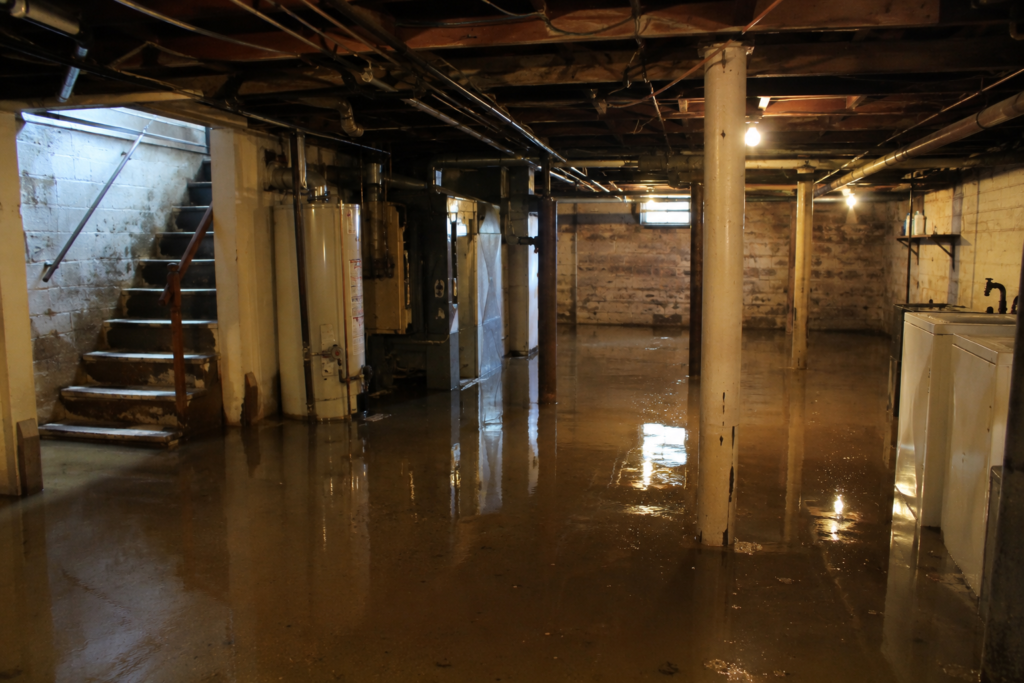
Most Grand Rapids homeowners don’t think about their basement until there’s water in it. Then suddenly it’s the only thing they can think about.
We get these calls year-round – spring snowmelt, summer storms, February pipe bursts. And in almost every case, the homeowner says the same thing: “I didn’t even know this was coming.” Sometimes that’s true. But often, the warning signs were there for months. The sump pump that was running constantly. The small crack in the wall that kept reappearing. The musty smell that got dismissed as “old house.”
This guide is for Grand Rapids homeowners who are either dealing with a flooded basement right now or trying to make sure it never happens to them. We’re going to skip the generic advice and focus on what actually applies here – because a basement in Creston or Eastown behaves differently than one in Arizona, and the solutions need to match.
Why Grand Rapids Basements Flood – The Real Reasons
There’s no single answer. In most cases we respond to, it’s a combination of factors – and understanding which ones apply to your home determines what actually needs to be fixed.
Clay soil and hydrostatic pressure
Much of Grand Rapids sits on clay-heavy soil. Unlike sandy soil, clay doesn’t drain – it holds water and expands when saturated. During a heavy rain or spring thaw, that swollen soil pushes against your foundation walls from every direction. This is called hydrostatic pressure, and it’s why basements develop horizontal cracks, bowing walls, and seeping joints over time. You can’t see it happening, but you’ll see the results.
The Grand River and regional drainage
Neighborhoods close to the Grand River – parts of the West Side, Riverside Park, Belknap Lookout – sit in low-lying terrain where groundwater levels are naturally higher. During wet seasons, that water table rises closer to the surface, which means it has less distance to travel before it reaches your basement floor. If you live in one of these areas and deal with recurring seepage, it’s not bad luck. It’s geography.
Aging sewer infrastructure
Grand Rapids has a lot of housing stock from the early and mid-1900s. Many of these homes are on combined sewer systems – meaning stormwater and sewage share the same pipes. When heavy rain overwhelms the system, sewage can back up through floor drains. This is one of the more unpleasant flooding scenarios because the water isn’t clean. If you’ve ever had dark water come up through a basement drain during a storm, that’s likely what happened.
Sump pump failure
A lot of Grand Rapids basements rely entirely on their sump pump to stay dry. That’s fine – until the pump fails. Float switches stick. Motors burn out. And most critically: power goes out right during the storm that’s sending the most water your way. If your sump pump doesn’t have a battery backup and you lose electricity during a storm, your basement protection is gone.
Pipe failures
Michigan winters are hard on pipes. Older supply lines in unheated crawl spaces or exterior walls can freeze and burst. Even without freezing, galvanized pipes that are 50+ years old corrode from the inside and fail without warning. A burst pipe can put hundreds of gallons into a basement in under an hour. If you need help identifying where a leak is originating, our pipe leak detection team can pinpoint it before it becomes a bigger problem.
What to Do When You Find Water in Your Basement
The first 30 minutes matter more than most people realize. Water moves fast – into drywall, under flooring, through insulation. The longer it sits, the more it costs to fix.
- Don’t go in if water is near electrical outlets, panels, or appliances. Turn off the circuit breaker to the basement first, or stay out until the water level is confirmed safe.
- Find the source. Is water coming through the wall? Up through the floor drain? From a burst pipe overhead? The source determines everything about what happens next.
- Stop what you can stop. If it’s a pipe, shut off the main water supply. If it’s a drain backup, move things out of the way fast.
- Move valuables off the floor. Documents, electronics, furniture – get them elevated immediately. Even an inch of water will ruin what’s sitting on the floor.
- Call for help. If there’s more than an inch of standing water or you can’t identify the source, bring in professionals. The extraction and drying equipment matters – consumer shop vacs and fans aren’t built for this.
One thing homeowners often don’t realize: mold can begin developing within 24 to 48 hours of water intrusion in the right conditions. Grand Rapids summers are humid, which accelerates this. Getting the moisture out fast isn’t just about the water you can see – it’s about what happens inside the walls after.
Prevention: What Actually Works for Grand Rapids Homes
Test your sump pump before storm season – every year
Pour a bucket of water into the pit slowly. It should kick on before the water gets too high, pump down, and shut off cleanly. If it hesitates, runs but doesn’t lower the water level, or doesn’t turn on at all – replace it before the next big rain. A new sump pump costs a few hundred dollars. A flooded basement costs several thousand. Add a battery backup if you don’t have one; Grand Rapids spring storms knock out power at exactly the moment you need the pump most.
Install a backwater valve if you’re on a combined sewer system
If your neighborhood has experienced sewer backups during storms, a backwater valve on your main sewer line is the single most effective thing you can do. It’s a one-way valve – water flows out, but it can’t flow back in. A licensed plumber can install one in a day. Grand Rapids occasionally offers rebate programs for this through the city’s stormwater management office – worth checking before you schedule the work.
Look at your downspouts honestly
Walk outside during a rain and watch where the water goes when it comes off your roof. If your downspouts discharge within a foot or two of the foundation, that water is going straight into the soil against your walls. Extensions are cheap and effective – they should carry water at least six feet away, ideally toward the street or a lower part of the yard.
Take foundation cracks seriously
Hairline cracks in poured concrete walls are common and often stable. But horizontal cracks, stair-step cracks in block foundations, or cracks that have grown since you last looked at them are different. These are signs of soil movement or hydrostatic pressure damage, and they get worse — not better – if left alone. A crack that’s letting in a trickle today can open significantly after one hard freeze-thaw cycle.
For older Grand Rapids homes specifically
If your home was built before 1960 and has a stone or brick foundation, it was never designed to be fully waterproof. Those foundations breathe and seep by nature. Interior drainage systems – a perimeter drain that collects water coming through the walls and routes it to the sump pump – are often the most practical long-term solution for these homes. It doesn’t stop water from entering the foundation, but it controls where it goes before it can cause damage.
Mistakes That Make Basement Flooding Worse
Waiting to see if it dries on its own. Sometimes surface water does dry. But inside walls and under flooring, it often doesn’t – and by the time mold is visible, the remediation cost is significantly higher than early extraction would have been.
Not documenting before cleanup. If you have homeowner’s insurance, photograph and video everything before moving anything. Adjusters need to see the extent of the damage. Cleaning up first and calling your insurer later often leads to denied or reduced claims.
Assuming the damage is only where the water is visible. Water wicks upward through drywall and wood. A half-inch of water on the floor can mean moisture absorbed several inches up the lower wall. Thermal imaging and moisture meters show what’s actually wet – not just what looks wet.
Turning off drying equipment early. Industrial drying typically runs three to five days after water removal. Shutting it off because “it feels dry” is one of the most common ways mold problems develop after restoration.
When to Call a Professional
Not every wet basement needs a restoration crew. A slow drip from a fitting you can tighten, a small amount of condensation on pipes – these are maintenance items.
But call us when:
- There’s standing water of any depth and you can’t immediately identify the source
- The water is dark or has an odor – this indicates sewage involvement
- You can see or smell mold growth after a previous flooding event
- The water reached drywall, insulation, or stored belongings
- You’re not sure whether the drying is actually complete
Our flooded basement cleanup service covers everything from water extraction and structural drying to content documentation for insurance claims. We’ve worked in homes throughout Grand Rapids – from Heritage Hill to Byron Center – and we know the building types, the common failure points, and what insurance adjusters need to see.
If you’re not sure whether your situation warrants a call, call anyway. A five-minute conversation costs nothing and we’ll tell you honestly whether you need us or whether you can handle it yourself.
24/7 emergency line: (616) 588-9420
Leave a Reply