You turn on the kitchen faucet on a cold morning and get a trickle, or nothing at all. Somewhere behind a wall, under the floor, or in the crawl space, water has frozen solid inside a pipe. What you do in the next few minutes decides whether this stays a minor inconvenience or becomes a burst pipe and a flooded floor.
Quick answer: If a pipe is frozen, keep the faucet open, find the frozen section, and warm it slowly with a hair dryer or warm towels. Never use an open flame. If a pipe has already burst, shut off the main water supply first, turn off power to wet areas, and call for help.
If water is already coming through a ceiling or wall, call Grand Rapids MI Water Damage at (616) 588-9420 and our On-Call team will walk you through the next steps.
How to Tell a Pipe Is Frozen
Frozen pipes usually give a few warnings before anything breaks:
- Water flow drops to a trickle, or a faucet gives no water at all
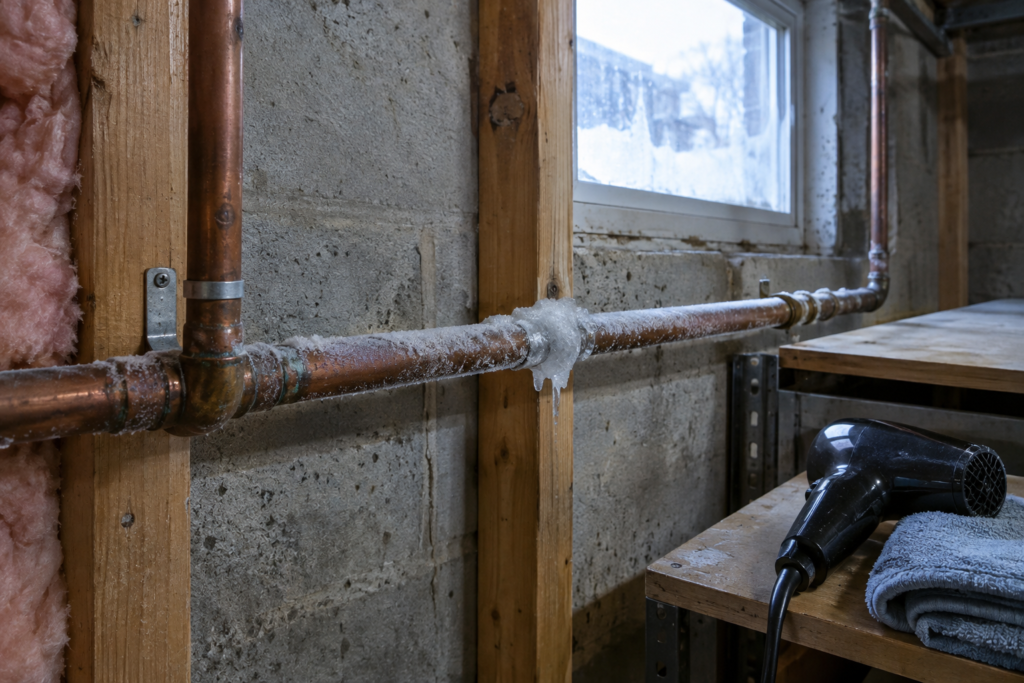
- Frost on the outside of exposed pipes
- A strange smell from a drain or faucet, which can mean a blocked or partly frozen line
- A pipe that feels very cold, or looks slightly bulging
- Only one faucet affected, which often points to a freeze in that branch of the plumbing rather than the main supply
If only the hot or only the cold side fails, the freeze is probably in that line. If nothing runs anywhere in the house, the freeze may be closer to where the water enters the building.
Where Pipes Freeze in Grand Rapids Homes
Pipes freeze where cold air reaches them and warm indoor air does not. In this area, the usual trouble spots are:
- Pipes along exterior walls, especially on the north side of the house
- Plumbing in unheated crawl spaces, basements, and garages
- Pipes in attics or in cabinets against outside walls, such as under kitchen and bathroom sinks
- Outdoor hose bibs and the short runs of pipe that lead to them
- Pipes in rooms that are rarely heated, like a back mudroom or an unused bedroom
Older homes in Eastown often have plumbing routed through exterior walls that were never insulated well, which makes them more exposed during a hard cold snap.
What to Do First When a Pipe Freezes
Act quickly, but stay calm. Frozen is a problem; burst is an emergency. Your goal is to thaw the pipe before pressure splits it.
- Open the faucet. Leave the tap on the frozen line open. As the ice melts, water needs a place to flow, and open taps relieve pressure in the pipe.
- Find the frozen section. Look for frost, feel for the coldest spot, and follow the pipe back from the faucet that is not working.
- Warm it slowly. Use a hair dryer on a low setting, warm towels wrapped around the pipe, or a heating pad. Start closest to the faucet and work back toward the frozen area.
- Keep checking. Once water starts moving, let it run for a bit, and look along the pipe for any cracks or drips.
What Not to Do
Some thawing shortcuts cause more damage than the freeze itself:
- Never use an open flame. A blowtorch, propane heater, or lighter can start a fire inside a wall or damage the pipe.
- Do not use a space heater near wet or wood surfaces without staying close and keeping it clear of anything flammable.
- Do not pour boiling water directly onto a pipe. Rapid heating can crack it.
- Do not leave the pipe unattended while thawing. If it is already cracked, water will start flowing as soon as the ice melts.
If you cannot find the frozen section, the pipe is behind a wall, or nothing you try is working, stop and call a professional. Opening a wall yourself is rarely the best first move.
If a Pipe Bursts
A frozen pipe often splits along the ice blockage, and the real flood begins when the ice melts and water starts moving. If you see water spraying, dripping from a ceiling, or pooling on a floor:
- Shut off the main water supply. Know where your main shutoff is before you need it. Turn it clockwise until it stops.
- Turn off electricity to wet areas. Do this only if you can reach the panel without standing in water. If you cannot, wait for a professional.
- Open faucets to drain the line. This helps relieve the pressure and empties the remaining water in the system.
- Take photos and video. Capture the burst pipe, the water, and everything damaged before you move anything. This helps your insurance claim.
- Call for help. The longer water sits in drywall, insulation, and flooring, the more it spreads.
Once the water is stopped, burst pipe water damage cleanup handles the water removal, drying, and sanitizing that follow, so the damage does not turn into mold later.
When the Problem Is the Main Line
If no water is coming into the house at all, or the water meter keeps running even though everything is off, the problem may be in the main supply line rather than a single pipe inside the home. Frozen or broken lines outside the house, or between the street and your foundation, need a different kind of repair. A main water line break repair is the next step in that situation.
After the Thaw: Check for Hidden Leaks
A pipe that has frozen can look fine and still have a hairline crack that only leaks once water is flowing. After thawing a pipe, check the area for drips, damp spots, and stains over the next few days. Watch the water meter if you can, because it should stay still when nothing is running.
If you suspect a leak you cannot see, such as a damp wall, a stained ceiling, or a water bill that jumps with no explanation, leak detection services can trace the source without tearing open every wall.
How to Prevent Frozen Pipes This Winter
Most frozen pipes are preventable, and fall is the best time to deal with them. A few steps make a big difference:
Insulate exposed pipes. Foam pipe sleeves on pipes in basements, crawl spaces, garages, and attics cost little and slow heat loss. Pay the most attention to pipes along exterior walls.
Seal air leaks. Gaps around where pipes enter the house, cracks in rim joists, and open vents let cold air reach plumbing. Sealing them helps keep the space around pipes warmer.
Disconnect outdoor hoses. Remove garden hoses and, if your home has one, shut off and drain the outdoor faucet line before the first hard freeze.
Keep the heat on. If you travel in winter, do not turn the heat completely off. A steady, moderate temperature is safer than letting the house go cold.
Open cabinet doors on cold nights. Under-sink cabinets on exterior walls trap cold air against the pipes. Opening the doors lets warmer room air reach them.
Let faucets drip during a deep freeze. A slow trickle of water through a vulnerable line can help keep it from freezing solid.
Know where your main shutoff is. Everyone in the household should know how to turn it off quickly.
For crawl spaces, the biggest fix is usually controlling the air and moisture below the house. Crawl space vent sealing and conditioning helps keep cold outside air away from the plumbing under your floors.
Homes in Cascade and other areas with larger floor plans often have long pipe runs to garages, bonus rooms, or outdoor spigots, which are all worth checking before the first freeze.
Why Frozen Pipes Cause So Much Damage
Water expands when it freezes, and that pressure can split a pipe or loosen a joint. The break often does not show until the ice melts. Then water runs freely inside a wall or ceiling, sometimes for hours before anyone notices. Soaked drywall, insulation, and subfloor are ready for mold within a couple of days if they are not dried properly.
That is why fast action matters, and why checking pipes after a cold snap is worth doing even if everything seems fine.
Frequently Asked Questions
How cold does it have to be for pipes to freeze?
Pipes can freeze when temperatures stay well below freezing, especially overnight and when wind hits an exposed wall. Uninsulated pipes in cold spaces like crawl spaces and garages are the most vulnerable.
Will a frozen pipe always burst?
No. Many frozen pipes thaw without breaking. But ice can crack a pipe or loosen a joint, and the damage may only show once the ice melts and water begins to flow.
Can I thaw a frozen pipe myself?
Often yes, if you can reach it and can warm it slowly with a hair dryer or warm towels. If the pipe is inside a wall, you cannot find the frozen area, or it already leaks, call a professional.
Does homeowners insurance cover a burst pipe?
A burst pipe from freezing is often treated as sudden damage, but coverage depends on your policy and the circumstances. Ask your insurer what applies and what documentation they need.
Should I turn off my water if I leave for a few days?
Shutting off the main and draining the lines can reduce the risk, but the right step depends on your home and heating system. If you are unsure, ask a plumber before leaving.
What should I do if I find water on the floor and cannot find the source?
Shut off the main water supply, take photos, and call for help. Hidden leaks can spread under flooring and inside walls.
If You Need Help Right Now
A frozen pipe can turn into a flooded home quickly, and the first few hours matter. If a pipe has burst or you have found water damage after a freeze, call Grand Rapids MI Water Damage at (616) 588-9420 for a transparent estimate and a clear plan.
We help homeowners across the area, including in Creston and nearby neighborhoods.
Leave a Reply