A washing machine overflow doesn’t wait for a good time to happen. A burst supply hose, a stuck valve, or a clogged drain line can send water across your laundry room and into the basement in minutes. In Michigan’s humid climate, standing water that isn’t removed quickly can soak into subfloors, carpet padding, and drywall, and mold can begin forming within 24 to 48 hours. Grand Rapids MI Water Damage handles washing machine overflow cleanup for homes across the Grand Rapids area – call (616) 588-9420 to get a technician out to your property.
Signs You’re Dealing With an Overflow Problem
Not every overflow is obvious right away. Watch for water pooling around the base of the machine, a damp or musty smell in the laundry room, discoloration on the floor near the washer, warped baseboards, or water stains on the ceiling below if your laundry room is upstairs. If your washer sits on a slab or near a drain, water can travel further than it looks before it’s noticed – by the time you see a stain, the moisture may already be under the flooring.
What To Do Before We Arrive
If you catch the overflow early, a few steps can limit the damage. Shut off the water supply valve behind the washer, and if it’s safe to do so, turn off power to the laundry room at the breaker rather than unplugging the machine directly if you’re standing in water. Move any boxes, rugs, or furniture off the wet floor if you can do so safely. Don’t run fans or space heaters directly on wet drywall, since trapped moisture behind the wall needs proper airflow, not just surface drying. Avoid walking through standing water near outlets or the machine itself.
Why This Happens So Often in Older Grand Rapids Homes
Washing machine overflows are usually mechanical, not weather-related, which is part of why they catch homeowners off guard. A cracked or disconnected supply hose is the most common cause, followed by a worn door seal on front-load machines, a water inlet valve that sticks open, or a drain line that’s clogged and backs up onto the floor instead of into the standpipe. Homes with original plumbing from decades ago, or washers that have never had their hoses replaced, are more prone to this kind of failure. If the overflow reaches your basement, it often overlaps with a broader flooded basement cleanup situation rather than a simple spill.
Our Washing Machine Overflow Cleanup Process
Inspection and Containment
We start by identifying the source of the overflow and how far the water has traveled – including under flooring and behind baseboards, not just what’s visible. Containment barriers go up first to stop water from spreading into unaffected rooms while we work.
Water Extraction
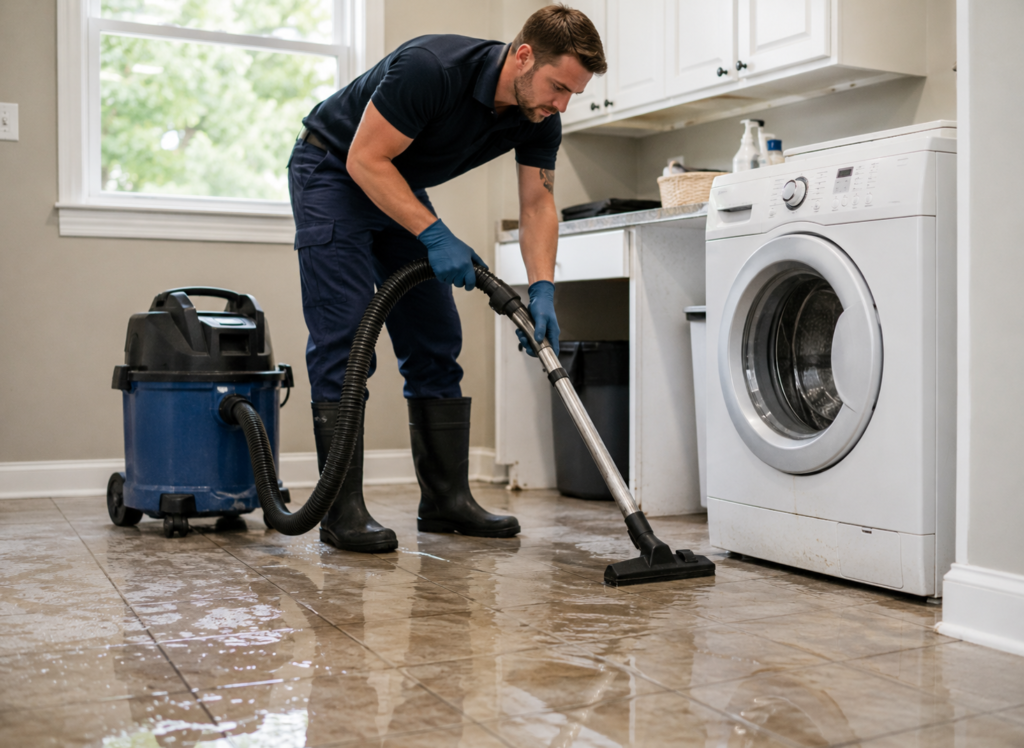
Standing water is removed with extraction equipment and wet vacuums. Carpet and padding absorb water fast, so this step happens quickly to limit how deep the saturation goes. For carpet that’s already heavily soaked, we follow the same detailed steps used in our carpet water damage restoration service.
Moisture Detection
We use moisture meters and thermal imaging to map out where water has spread beneath the surface. This step matters because drywall or subfloor can look dry on top while still holding moisture underneath — skipping this is how mold problems start weeks later.
Structural Drying
Air movers and dehumidifiers are placed based on the moisture map, not just set up randomly in the room. Drying continues until moisture readings in the affected materials return to normal levels, not just until the floor feels dry to the touch.
Sanitizing and Final Check
Once the area is fully dry, affected surfaces are cleaned and sanitized. We do a final walkthrough to check for any plumbing issue that caused the overflow in the first place, since drying the damage without addressing the cause just sets up a repeat incident.
What Affects the Scope of the Cleanup
How much work is involved depends on a few factors: how long the water sat before it was noticed, whether it reached a finished basement or crawlspace, what kind of flooring was affected (tile holds up differently than laminate or carpet), and whether water tracked into wall cavities. A quick catch with a hard-surface floor is a very different job than an overflow that ran overnight into a carpeted basement.
Insurance and Documentation
Most homeowners’ policies cover sudden, accidental water damage from appliance failure, though coverage details vary by policy and insurer. We document the affected areas and the work performed, which you can use to support a claim. If you’re unsure whether your situation is covered, it’s worth calling your insurance company directly before assuming either way.
Preventing Future Overflows
Supply hoses are the most common failure point and are worth replacing every few years, especially rubber hoses – braided stainless steel hoses hold up longer. If your washer doesn’t have a drain pan or a water sensor shutoff, both are inexpensive ways to catch a problem early. Periodically checking behind the machine for early signs of a slow leak can catch an issue before it turns into a full overflow.
Areas We Serve
We respond to washing machine overflow calls throughout Grand Rapids, including Byron Center and Forest Hills.
Frequently Asked Questions
Will my insurance cover washing machine overflow cleanup?
Most policies cover sudden, accidental water damage from appliance failure, but this depends on your specific policy. We provide documentation to support your claim.
Will mold be a problem after an overflow?
If water isn’t fully dried within 24 to 48 hours, mold can start to develop, especially inside walls or under flooring where it’s not visible. That’s why moisture detection and full structural drying matter more than just mopping up the surface.
Do I need to replace my flooring?
It depends on the material and how long it sat wet. Tile often survives; carpet, laminate, and particleboard subfloor are more likely to need replacement depending on exposure time.
Can I just use fans and a wet vac myself?
For a small, quickly-caught spill on a hard floor, that may be enough. For anything that’s soaked into carpet, padding, or reached a wall or subfloor, DIY drying usually misses hidden moisture, which is exactly what leads to mold later.
What if the overflow reached my basement?
That’s treated as a larger water damage situation rather than a simple appliance cleanup – the same extraction and drying process applies, just across a bigger area.
How fast can you get someone out?
Call us and we’ll get a technician scheduled as quickly as possible for your situation.
Contact Grand Rapids MI Water Damage at (616) 588-9420 for washing machine overflow cleanup.
Nearby Grand Rapids Areas We Serve Washing Machine Overflow Cleanup Services
Why Choose Us for Washing Machine Overflow Cleanup in Grand Rapids, MI?
Licensed & Insured
Fully protected for your peace of mind
Free Estimates
No obligation quotes
5-Star Rated
Top reviews from customers
Same-Day Service
Quick response times
Need Washing Machine Overflow Cleanup Services?
Contact us today for a free estimate. Our experienced team is ready to help!