If water got into your home recently – a leak, a flood, an overflow, or even a small spill that sat too long – mold is probably not the first thing on your mind. It should be. Mold doesn’t need days or weeks to start growing. Under the right conditions, it can begin within 24 to 48 hours of water exposure, and by the time it’s visible, it’s often already spread further than what you can see on the surface.
This is especially relevant in Grand Rapids, where humid summers and older housing stock with original plumbing create ideal conditions for mold once moisture gets into a wall, floor, or ceiling.
How Fast Does Mold Actually Grow?
Mold spores are already present in almost every home – they’re part of the normal indoor and outdoor environment. What changes the equation is moisture. Given a damp surface, room-temperature air, and something organic to feed on (drywall paper, wood, dust, carpet fiber), mold spores can begin germinating within 24 to 48 hours. Visible colonies – the fuzzy or discolored patches most people recognize as mold – can appear within 3 to 12 days, depending on humidity levels and how much moisture is present.
This timeline is why “wait and see” is rarely a good approach after a water event. By the time you notice a musty smell or a stain, the window for simple drying-only intervention may have already closed.
Where Mold Shows Up After Water Damage
Mold doesn’t always appear where the water damage happened. Because moisture travels – through wall cavities, under flooring, along wood framing – mold can show up in places that seem unrelated to the original leak. Common spots after a water event include:
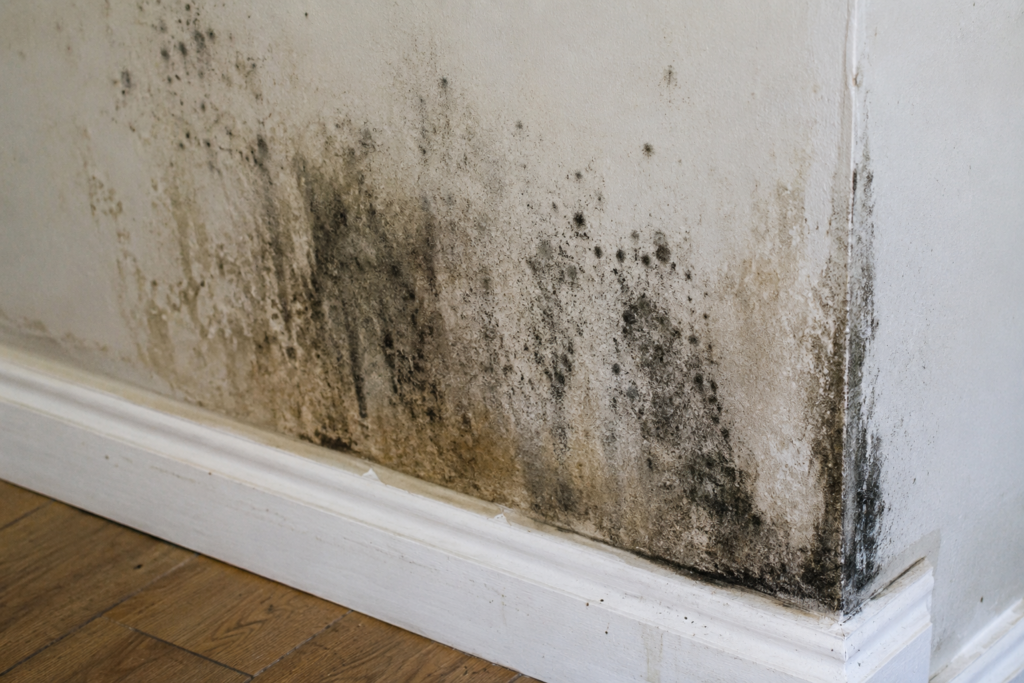
- Behind baseboards and drywall near the original leak or flood line
- Under carpet and carpet padding, especially in basements
- Inside cabinets below sinks after a slow plumbing leak
- Around window frames after roof or window leaks
- Inside HVAC ducts if humidity was elevated for an extended period
- Behind furniture or boxes that blocked airflow to a damp wall
Signs Mold May Already Be Growing
Not all mold growth is visible right away. Some signs to watch for after any water incident:
A musty or earthy smell that wasn’t there before, even if you can’t see any visible growth. Smell is often the first indicator, since mold can develop inside a wall cavity before it’s visible on either side.
Discoloration – spots that are green, black, gray, or white, and that seem to spread rather than stay in one place. Mold often starts small and expands outward from the original moisture source.
Warping or bubbling on walls, baseboards, or flooring, which usually indicates trapped moisture underneath – a common precursor to mold even before any growth is visible.
Allergy-like symptoms that seem to worsen indoors – sneezing, congestion, or irritated eyes — can sometimes point to mold exposure, though these symptoms have many possible causes and aren’t a mold diagnosis on their own.
What To Do If You Suspect Mold After a Water Event
Address the moisture source first. Mold won’t stop growing until the underlying moisture is resolved, so drying the area is not optional – it’s the first real step, whether or not mold is visible yet.
Avoid disturbing visible mold yourself. Scrubbing or cutting into moldy material without containment can release spores into the air and spread contamination to unaffected rooms. If you see visible mold covering a large area, it’s worth having it assessed before attempting cleanup.
Don’t just paint over discoloration. Painting over a moldy or previously damp surface doesn’t address the underlying moisture or the mold itself – it just hides the problem until it resurfaces, often worse than before.
Get the moisture level checked, not just the visible mold. A surface that looks dry can still be holding moisture inside a wall or under flooring. If you’re unsure how far a water event’s effects have spread, our mold inspection and testing service identifies both visible and hidden moisture before any remediation begins.
When It’s a DIY Job and When It’s Not
Small, isolated mold spots – for example, a patch smaller than a few square feet on a hard, non-porous surface that was caught quickly – can sometimes be cleaned with basic household products, provided the moisture source has been fixed. Larger areas, mold inside HVAC systems, mold that’s returned after a previous cleaning attempt, or mold following a significant water event (a flood, burst pipe, or prolonged leak) generally need professional remediation. This is because porous materials like drywall and carpet padding can hold mold spores deep inside, where surface cleaning doesn’t reach.
If mold has developed after a larger water incident, our mold remediation services address both the contamination and the materials that may need to be removed and replaced, rather than just cleaning the visible surface.
Black Mold: Should You Be More Worried?
“Black mold” is a term people often use with alarm, but not all black-colored mold is the specific toxigenic species (Stachybotrys chartarum) associated with more serious health concerns – and appearance alone can’t reliably tell you which species you’re dealing with. What matters more than the color is the extent of growth and how long it’s been present. If you’re seeing significant dark mold growth, especially after a water event that wasn’t addressed quickly, it’s worth having it properly identified rather than guessing based on color. Our black mold remediation and removal service handles this kind of assessment and cleanup directly.
How to Reduce the Risk After Any Water Event
- Get standing water extracted and the area drying within the first day when possible
- Run dehumidifiers and fans in affected areas, not just the room where water was visible
- Check inside cabinets, behind furniture, and under carpet edges, not just open floor space
- Keep humidity in your home below 50% where possible, especially in basements
- Don’t assume a surface is dry just because it feels dry to the touch – moisture meters catch what hands can’t
Grand Rapids Homes and Mold Risk
Michigan’s humid summer months and the freeze-thaw cycles of winter both create conditions where moisture problems are common – humidity indoors during summer, and condensation or ice dam-related leaks in winter. Homes with basements, which make up a large share of housing in the Grand Rapids area, are particularly prone to mold if a flooding or leak event isn’t fully dried out.
Areas We Serve
We handle mold assessment and remediation following water damage throughout the Grand Rapids area, including Ada and Cascade.
Frequently Asked Questions
How long after water damage does mold typically appear? Mold can begin growing within 24 to 48 hours under the right conditions, with visible colonies sometimes appearing within a week to twelve days. The timeline depends on humidity, temperature, and how much moisture is present.
Can mold grow even if the area looks dry? Yes. A surface can feel dry to the touch while still holding moisture underneath in drywall, subfloor, or wall cavities. This is why moisture meters and thermal imaging are used during proper mold inspections rather than relying on visual checks alone.
Is all black mold dangerous? Not all mold that appears black or dark in color is the specific species associated with more serious health effects. Proper identification matters more than color alone, especially for larger growth areas.
Should I try to clean mold myself? Small, isolated spots on hard surfaces, caught early with the moisture source resolved, can sometimes be handled with basic cleaning. Larger areas, recurring mold, or mold following a significant water event are usually better handled professionally, since porous materials can hold contamination that surface cleaning won’t remove.
Does homeowners insurance cover mold remediation? It depends on the cause and your specific policy. Mold resulting from a sudden, covered water event is more likely to be included than mold from a long-term, unaddressed leak. Check with your insurer for details specific to your policy.
If you’re dealing with mold after a recent water event in Grand Rapids, Grand Rapids MI Water Damage can assess the situation and walk you through what’s actually needed. Call (616) 588-9420.
Leave a Reply