
Nobody reads their homeowner’s insurance policy until they need it. And by then, the basement is already wet, the adjuster is asking for documentation you don’t have, and you’re realizing the coverage you assumed you had isn’t quite what’s actually in the paperwork.
We’ve worked alongside a lot of Grand Rapids homeowners through this process – sometimes starting the restoration while the claim is still being sorted out. And the pattern we see most often isn’t people getting outright denied. It’s people getting less than they’re owed because they didn’t know what to document, what to say, or what their policy actually covers.
This is a practical walkthrough of how water damage claims actually work – what insurers look for, where claims get stuck, and how to protect yourself from the start.
First: Understand What Your Policy Actually Covers
This is where most people get surprised. Standard homeowner’s insurance policies in Michigan cover sudden and accidental water damage – a burst pipe, an appliance that fails without warning, a roof damaged by a storm that lets water in. What they generally don’t cover is gradual damage – a slow leak under the sink that went unnoticed for months, seepage through foundation walls, or a sump pump that’s been failing slowly over time.
The distinction matters because adjusters are trained to look for evidence of how long the damage has been occurring. Staining that’s clearly old, mold that’s been growing for weeks, or rot in the floor joists – these tell the adjuster the damage wasn’t sudden. That’s often grounds for a reduced payout or denial.
Flood damage – meaning water that enters your home from outside, from rising groundwater or overflowing rivers – is almost never covered under standard homeowner’s insurance. That requires a separate flood insurance policy, typically through FEMA’s National Flood Insurance Program. If you’re in a flood-prone area near the Grand River, this is worth knowing before you need it.
Sump pump overflow is another gray area. Some policies cover it, some don’t, and some offer it as an optional rider. Check your declarations page specifically for “water backup” or “sump pump failure” coverage – it’s usually listed separately.
The First Hour After Water Damage: What to Do Before You Touch Anything
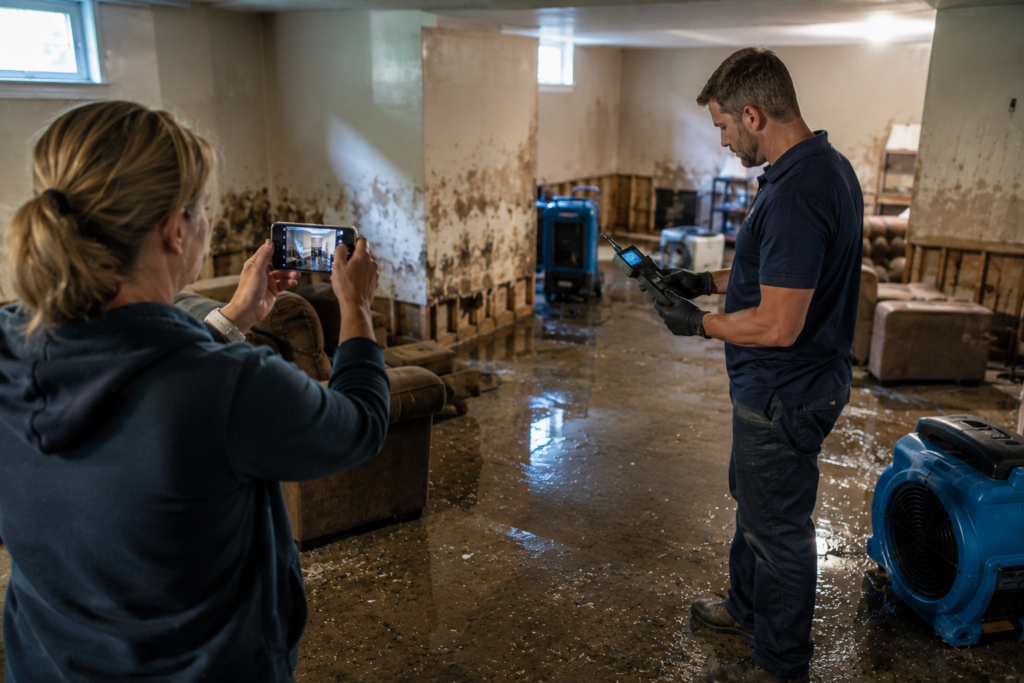
The documentation you create in the first hour can be the difference between a smooth claim and a disputed one. Before you move furniture, before you start mopping, before you call anyone – get out your phone and record everything.
Walk through the entire affected area on video. Narrate as you go – describe what you’re seeing, where the water is coming from if you can tell, how deep it is, what’s been damaged. Open closets, pull back rugs, show the walls. Then take still photos of everything the video might have missed.
Don’t throw anything away. Damaged furniture, ruined flooring samples, soaked insulation – your adjuster may want to see it, and disposing of damaged property before the claim is settled can complicate things.
If you have a flooded basement that’s actively getting worse – water still rising, pipe still running – stopping the source comes first. Safety before documentation. But once the immediate emergency is handled, document before cleanup begins.
One thing worth knowing:Professional restoration companies like ours produce moisture readings, thermal imaging reports, and written damage assessments that carry real weight with insurance adjusters. If you’re going through a claim, having that documentation from a certified restoration team is often more useful than photos alone. We provide full documentation as part of our water damage restoration services.
Calling Your Insurance Company – What to Say and What to Ask
Call your insurer as soon as possible after the damage occurs. Most policies have a requirement to report “promptly” – and while that’s vague, waiting days or weeks can give the adjuster a reason to question why you delayed.
When you call, keep it factual. Describe what happened and when. Don’t speculate about causes – “a pipe burst” is fine; “I think the pipe might have been leaking for a while but I’m not sure” gives the adjuster something to work with that doesn’t help you. Stick to what you know.
Ask these questions specifically:
- What is my deductible for water damage?
- Does my policy include water backup or sump pump coverage?
- Will I be assigned a specific adjuster, and what’s their contact information?
- What’s the timeline for an adjuster to come out?
- Am I authorized to begin emergency mitigation to prevent further damage?
That last question matters. Insurers generally expect you to take reasonable steps to prevent additional damage – and they typically cover emergency mitigation costs. But “authorized” means documented. Get confirmation in writing or via email that you can proceed with water extraction and flood cleanup before you start.
The Adjuster Visit: What They’re Looking For
Adjusters aren’t adversaries – but they’re also not advocates for you. Their job is to assess the damage accurately within the terms of your policy. Understanding what they’re evaluating helps you present your situation clearly.
Cause of loss
The adjuster will try to determine exactly how the water entered and whether that cause is covered. A burst pipe from freezing temperatures – covered. If you’re unsure whether water is coming from a pipe or another source, our pipe leak detection team can pinpoint the origin before the adjuster arrives, giving you a clear answer rather than a guess. Gradual seepage through a foundation crack – typically not covered. Be ready to explain what happened clearly.
Scope of damage
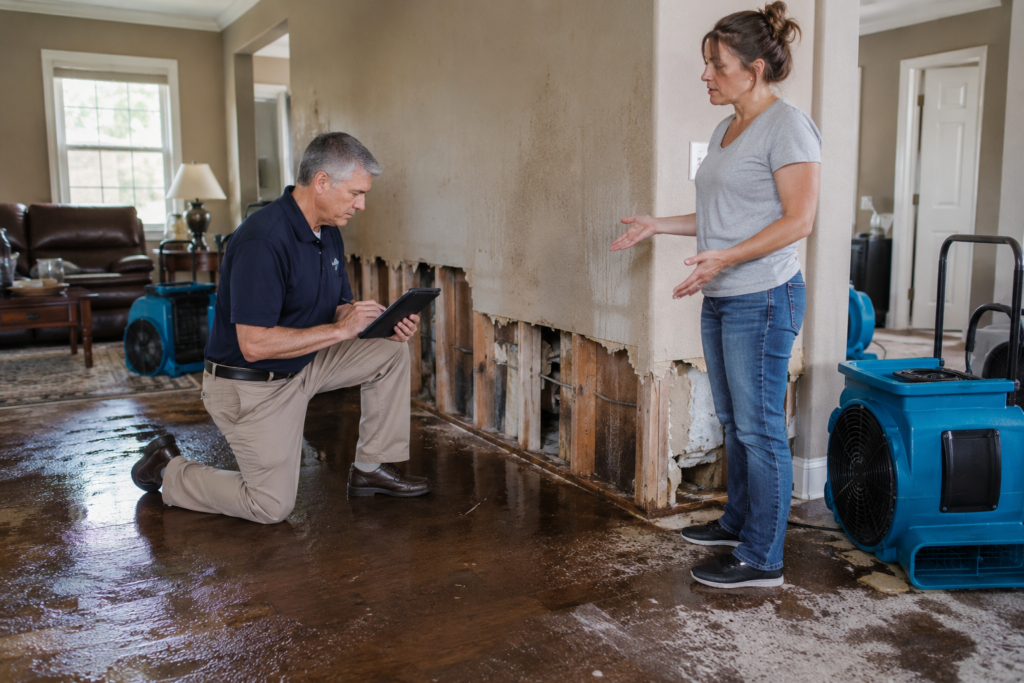
This is where professional moisture mapping makes a difference. Water that’s visible is easy to document. Water that’s wicked 18 inches up a drywall panel or saturated the subfloor under tile – that requires equipment to measure. If an adjuster only sees the surface, the scope estimate may be lower than the actual damage. Having a certified restoration team’s moisture report gives you something concrete to push back with if needed.
Pre-existing conditions
Adjusters are trained to distinguish new damage from old. Staining patterns, mold growth, rusted fasteners, and deteriorated materials all suggest the damage predates the current event. This is one reason why addressing water intrusion issues promptly matters – a basement that’s had slow seepage for years and then floods during a storm presents a complicated claim. The new damage is covered; the old damage isn’t.
Common Reasons Water Damage Claims Get Reduced or Denied
These are the situations we see most often where homeowners end up with less than they expected:
Gradual damage determination. If the adjuster concludes the damage was ongoing rather than sudden, the claim is typically denied or significantly reduced. Regular home maintenance – and documenting that you’ve been maintaining things – helps. A sump pump that was serviced six months ago looks very different from one that clearly hasn’t been touched in years.
No coverage for the actual cause. Flooding from outside the home, sewer backup without a rider, or groundwater intrusion – these are situations where standard policies simply don’t apply. The damage is real, but the coverage isn’t there.
Insufficient documentation. Claims without clear before/after documentation, without evidence of the cause, or where damaged items were disposed of early are harder to settle at full value. The adjuster can only assess what they can see and verify.
Delayed reporting. Waiting too long to report gives the insurer grounds to argue the damage worsened due to neglect rather than the original event. Most policies require “prompt” notice – when in doubt, report it.
If your claim has been denied and you believe it shouldn’t have been, Michigan homeowners have the right to request a written explanation and to file a complaint with the Michigan Department of Insurance and Financial Services. You can also request an independent appraisal if you disagree with the adjuster’s damage estimate – most policies include an appraisal clause for this situation.
Working with a Restoration Company During a Claim
One thing that helps the claims process significantly: having a restoration company involved early that documents everything properly from the start.
When our team responds to a burst pipe damage situation or any water emergency in Grand Rapids, we document moisture readings at multiple points, photograph all affected materials before removal, and provide a written scope of work that outlines exactly what needs to be done and why. That kind of structured documentation gives adjusters what they need to process the claim efficiently – and it gives you a clear record if anything gets disputed.
We work with all major insurance carriers and can communicate directly with your adjuster if that’s helpful. We’re not public adjusters – we don’t negotiate your claim – but we can make sure the technical side of the damage assessment is clear and complete.
Dealing with water damage and not sure where to start?Call us at (616) 588-9420 – we respond 24/7 across Grand Rapids and Kent County. We’ll assess the damage, start mitigation, and help you understand what you’re looking at before the adjuster arrives.
A Few Things Worth Doing Before Any of This Happens
The best time to understand your water damage coverage is before you need it.
Pull out your homeowner’s policy – or call your agent – and ask specifically about sudden water damage, sewer backup, sump pump failure, and flood coverage. Know your deductible. Know whether you have replacement cost or actual cash value coverage for personal property, because that makes a significant difference on older belongings.
Take a home inventory. A simple video walkthrough of your home twice a year – stored somewhere other than the home itself – gives you documentation of what you owned before any damage occurs. It’s one of those things that takes 20 minutes and most people never do until they wish they had.
And keep up with basic maintenance. A sump pump that’s been tested recently, gutters that are clear, a basement that you’ve been monitoring – these aren’t just good for preventing damage. They’re also evidence, if you ever need it, that you were maintaining your home and that damage was sudden rather than the result of neglect.
If you’ve already dealt with a flooded basement and want to understand what prevention actually looks like for Grand Rapids homes specifically, we’ve covered that in detail – the clay soil issue, the sump pump testing process, and what older homes near the Grand River need that newer builds don’t.
Leave a Reply