
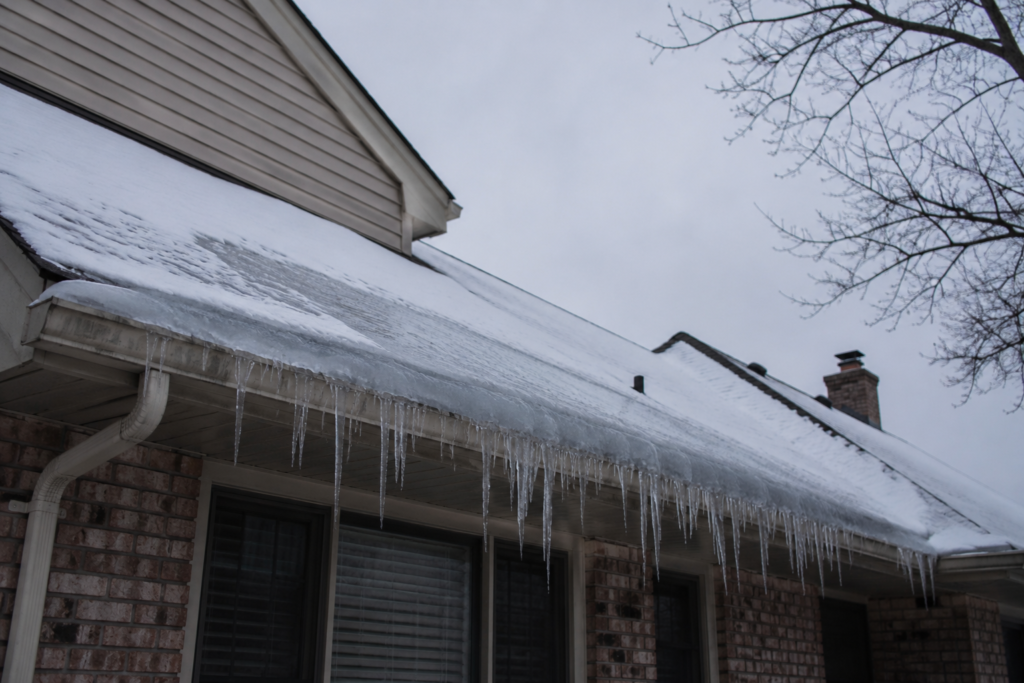
Grand Rapids winters bring a specific kind of water damage risk that doesn’t show up any other time of year: ice dams. Unlike a burst pipe or a basement flood, ice dam damage often starts quietly – a small stain on a bedroom ceiling, a bit of peeling paint near an exterior wall – and by the time it’s obvious, water has usually been getting into the attic or walls for weeks.
This guide covers how ice dams actually form, why Grand Rapids roofs are prone to them, and what to do if you’re dealing with one right now. For a broader look at what happens after any kind of water intrusion, see our water damage restoration process guide.
What Is an Ice Dam, and Why Does It Cause Water Damage?
An ice dam forms when heat escaping from the attic warms the roof deck enough to melt the snow sitting on it. That meltwater runs down the roof until it reaches the colder overhang – the part of the roof extending past the heated part of the house – where it refreezes. Over time, that refrozen ice builds into a ridge along the eaves.
Here’s where the damage comes in: once the ridge is thick enough, more meltwater coming down the roof has nowhere to go. It pools behind the ice dam instead of draining off the edge, and eventually it finds its way under the shingles, through the roof deck, and into the attic or the walls below.
This is different from a straightforward roof leak. A missing shingle usually causes a leak right where the shingle is missing. An ice dam can push water sideways, uphill even, under intact shingles – which is why the water stain on your ceiling might be several feet from where the ice dam actually formed.
Why Grand Rapids Homes Are Prone to Ice Dams
Ice dams need two things: snow on the roof, and an uneven roof temperature – warm enough near the ridge to melt snow, cold enough near the eaves to refreeze it. Grand Rapids gets both on a regular basis.
Attic insulation and ventilation gaps. Many homes in Grand Rapids’ older neighborhoods have attics that weren’t insulated to modern standards. Heat rises into the attic, warms the roof deck unevenly, and creates exactly the melt-refreeze cycle that builds an ice dam. Homes with poor attic ventilation are especially prone to this, since trapped heat has nowhere to go but up into the roof.
Freeze-thaw cycling. Michigan winters don’t stay consistently cold – a week of freezing temperatures followed by a warm spell, then a hard freeze again, repeats through the season. Every cycle is another opportunity for meltwater to refreeze at the eaves.
Roof design. Complex rooflines with valleys, dormers, or multiple pitches – common in the older Victorian and Craftsman homes found in neighborhoods like Eastown and Heritage Hill – create more opportunities for snow and ice to accumulate unevenly than a simple gable roof does.
Signs You Might Have Ice Dam Water Damage
- A visible ridge of ice along the roof edge, especially if icicles are hanging heavily from the gutters
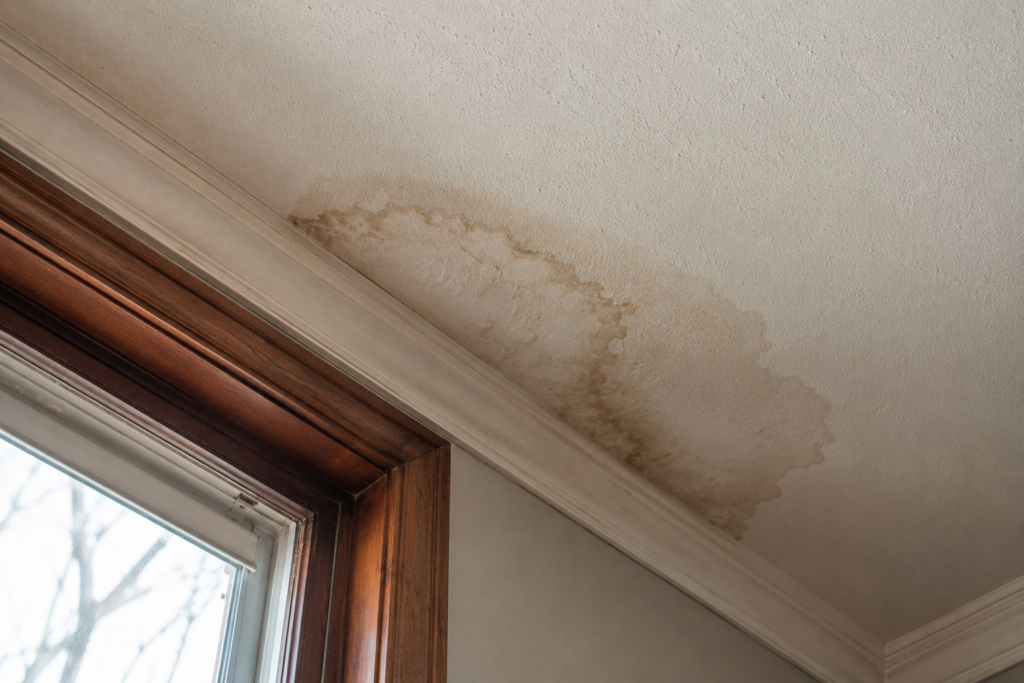
- Water stains on ceilings near exterior walls, particularly under sloped roof sections
- Peeling paint or bubbling drywall on an upper floor during or after a cold snap
- A musty smell in an upstairs room or closet that wasn’t there before
- Ice visible inside the attic, on the underside of the roof deck or on insulation
If you notice any of these, the damage is often already inside the wall or attic cavity even if it doesn’t look extensive from where you’re standing. Ceiling stains specifically are common with ice dams, since water pushed under the shingles often travels down into the attic floor before showing up as a stain – our ceiling water damage restoration service covers exactly this scenario.
What to Do If You Already Have an Ice Dam
Don’t climb up and chip at it. This is one of the most common ways homeowners injure themselves or damage their own roof every winter. Chipping ice can crack shingles or puncture the roof membrane, turning a water problem into a bigger one.
A roof rake can help with fresh snow. Removing snow load from the lower few feet of the roof, using a roof rake from the ground, reduces the amount of meltwater available to feed the dam. This works best before the dam has fully formed – once there’s a thick ice ridge, raking snow off the roof above it does limited good.
Calcium chloride socks are a short-term fix, not a solution. Filling a stocking with calcium chloride ice melt and laying it perpendicular across the dam can create a channel for water to drain. It buys time, but it doesn’t address the underlying insulation or ventilation issue causing the dam in the first place.
If water has already gotten inside, treat it like any other water intrusion. Move anything under the affected area, and if you see active dripping or a growing stain, get water damage professionals involved rather than waiting to see how bad it gets. Our water damage inspection service can find out how far the moisture has actually traveled – which is often further than what’s visible from inside the room.
Preventing Ice Dams Before They Form
Improve attic insulation and air sealing. The most effective long-term fix is stopping heat from reaching the roof deck unevenly in the first place. This usually means adding insulation and sealing gaps where warm air leaks from living space into the attic – around light fixtures, attic hatches, and duct penetrations.
Make sure attic ventilation is actually working. Soffit and ridge vents are designed to keep the underside of the roof close to outdoor temperature, which prevents the melt-refreeze cycle. Blocked soffit vents – often stuffed with insulation during a previous renovation – are a common, fixable cause of ice dams.
Clean gutters before the first freeze. Clogged gutters hold water at the eaves, giving meltwater somewhere to sit and refreeze even before a proper ice dam forms.
After the Damage: Why Structural Drying Matters
Ice dam water damage tends to be slow and hidden, which means the affected insulation and framing may have been wet for longer than a sudden pipe burst would allow. That extended exposure raises the risk of mold developing inside the wall or attic cavity before anyone notices a problem. Our structural drying and dehumidification service is built for exactly this kind of situation – drying out framing and insulation that’s been damp for an extended period, not just a quick surface dry.
If mold has already started, our mold remediation services page covers inspection and removal – or if it’s specifically contained to the attic space, our attic mold removal service is built for that environment.
Frequently Asked Questions About Ice Dams
Does homeowners insurance cover ice dam damage? Often yes, since it’s typically considered sudden water damage rather than a maintenance issue – but coverage varies by policy. It’s worth reviewing your specific plan or contacting your insurer directly. For more on how the claims process works generally, see our water damage insurance claim guide.
Can I prevent ice dams without replacing my roof? In most cases, yes. Ice dams are usually an insulation and ventilation problem, not a roofing problem, so addressing the attic side of the equation is often more effective – and less expensive – than roof work.
How do I know if the water reached my attic or just the ceiling? Visible staining on a ceiling doesn’t tell you the full extent of the moisture. An inspection with a moisture meter or thermal imaging is the only reliable way to know how far water traveled once it got past the roof deck.
Ready to Get Started?
If you’re dealing with ice dam water damage right now, or want an assessment before winter fully sets in, call Grand Rapids MI Water Damage today at (616) 588-9420.
Leave a Reply