A Step-by-Step Guide to the Water Damage Restoration Process in Grand Rapids
A heavy rainstorm in Grand Rapids can send water seeping through floors or walls in minutes. It affects homeowners across the city, from the historic streets of East Hills to the family homes of Alger Heights. Water damage is not just an inconvenience. It threatens your home’s structure, your family’s health, and your finances. At Grand Rapids MI Water Damage, we have seen how swift action can keep a minor leak from turning into a major disaster.
Quick answer: The water damage restoration process has four phases: emergency assessment, water extraction, drying and dehumidification, and final repairs. Extraction takes hours, drying takes days, and full restoration can take weeks depending on severity.
In this guide, we walk through the entire process, tailored to Grand Rapids residents. You will understand each step, spot potential problems early, and make informed decisions to protect your home. Whether it is a burst pipe in winter or basement flooding during the spring thaw, knowing the process helps you act with confidence and limit long-term damage.
Understanding the Water Damage Restoration Process
The water damage restoration process is a systematic approach to limiting harm, removing moisture, and returning your home to its pre-loss condition. It matters in Grand Rapids because frequent heavy rain and freeze-thaw cycles put stress on older brick homes in areas like Aberdeen Ridge. The process unfolds in four key phases: assessment, water removal, drying and dehumidification, and final repairs. Each one is vital to prevent mold growth, structural weakening, and health hazards from contaminated water.
1. Emergency Assessment
Emergency assessment starts with a thorough inspection to categorize the damage. Water is classified into three categories: clean (from a broken supply line), gray (from appliances like dishwashers), or black (sewage and other highly contaminated water). Technicians use moisture meters and thermal imaging to find hidden water behind walls and under floors. Basements are common in Grand Rapids, so this step often uncovers moisture in crawl spaces and lower levels affected by groundwater.
2. Water Extraction
Water extraction uses powerful pumps and vacuums to remove standing water quickly. This prevents further saturation of materials like drywall and insulation, which can swell and crumble if left untreated. For larger jobs, our emergency water extraction crews bring truck-mounted equipment that handles what a wet-dry vac cannot.
3. Drying and Dehumidification
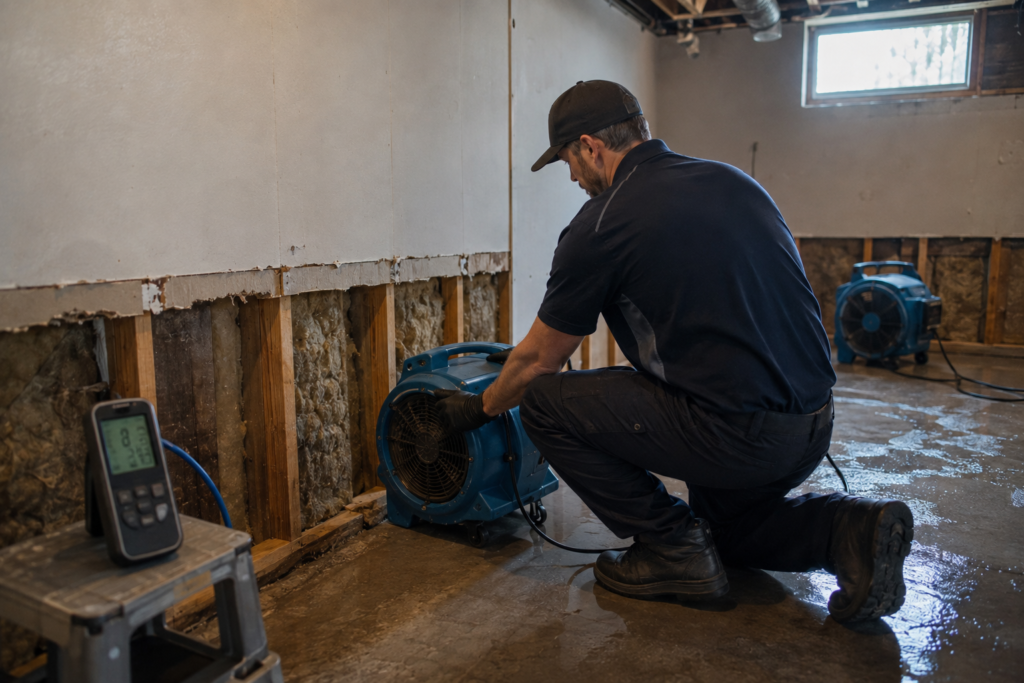
The drying phase uses industrial fans, dehumidifiers, and sometimes heat to remove remaining moisture. Monitoring is key here. Without it, incomplete drying can lead to warping in hardwood floors, which are common in Grand Rapids’ Craftsman-style homes.
4. Restoration and Repairs
Restoration and repairs include cleaning, sanitizing, and rebuilding affected areas. This can involve removing and replacing damaged materials, applying antimicrobial treatments, and making sure the work meets local building codes.
Every water damage restoration job in Grand Rapids follows this same four-phase backbone, but the details shift with the source of the water. A clean-water pipe break behind a wall is a very different job from a black-water basement flood after a storm. The categorization step at the start decides how aggressive the extraction, drying, and rebuild phases need to be, and it is the biggest factor in how long the whole process takes.
Call (616) 588-9420 if water is in your home right now. Our On-Call team will walk you through the next steps and provide a transparent estimate.
Why it matters: Proper restoration prevents secondary damage like mold, which thrives in damp Michigan homes and can begin developing within 24 to 48 hours.
Timeline: In ideal conditions, extraction takes hours, drying takes days, and full restoration takes weeks, depending on the extent of the damage.
Cost factors: The final cost depends on the water category, the size of the affected area, the materials involved, and how quickly drying begins. An on-site inspection is the only reliable way to get an accurate number.
Practical Tips for Handling Water Damage in Grand Rapids
When water damage strikes, time is on your side only if you act quickly. These steps help you handle the first hours safely.
Shut off utilities first. Turn off your main water supply and the electricity to affected areas to avoid shocks and further flooding. This matters especially in older homes with aging electrical systems.
Document everything. Photograph and video all the damage for your insurance claim, and note the source, for example snowmelt leaking through the roof and into your ceilings.
Start extraction carefully. If professionals are not immediately available, use a wet-dry vacuum on small areas, but never on sewage water, since it spreads contamination. Where heavy clay soils slow drainage around the Grand River, lift valuables and rugs off wet floors promptly to limit absorption.
Manage drying conditions. Open windows if the weather permits, but keep an eye on humidity, since humid summer days can slow the drying process. Use fans to circulate air toward wet spots without spreading contaminants. For ranch-style homes in Byron Center, focus on subfloors where water tends to pool.
Clean safely. Wear protective gear and use appropriate disinfectants. If mold appears, which is common after flooding, do not tackle large areas yourself. Have a professional team handle the mold removal so it is done safely and completely.
Local conditions play a big role. Freeze-thaw cycles can crack foundations and create hidden leaks, and larger properties in Forest Hills often deal with these issues after a hard freeze. Health and building requirements apply to sewage cleanup, so always confirm the work is done to code. Insurance in Michigan often covers sudden damage but not long-term neglect, so review your policy every year.
Pro tip for Grand Rapids winters: insulate pipes near exterior walls to prevent bursts during subzero temperatures. If black water enters the home during a storm-related sewer backup, treat it as a hazard and leave sanitization to professionals.
These tips help you take control in the first hours, but for complex cases involving structural elements, bring in experts early.
Common Mistakes to Avoid in Water Damage Restoration
Homeowners in Grand Rapids often underestimate water damage, which leads to costly mistakes.
Delaying professional help, thinking a fan or two will be enough. This ignores hidden moisture that can start feeding mold within 24 to 48 hours. The result is health risks like allergies and higher repair bills.
Ignoring water categorization. Treating black water like clean water spreads bacteria and can cause illness. In neighborhoods with older plumbing, such as East Hills, sewage backups are a real possibility, yet many people skip testing and risk voiding their insurance coverage.
Attempting full DIY restoration without the right tools. Without proper dehumidification, materials like carpet padding hold water and lead to rot in wood framing, which is common in older bungalows. This can compromise structural integrity, so a professional structural assessment should come before repairs.
Overlooking insurance documentation. If you do not log the damage, claims can be delayed or denied.
Skipping the power shutoff. Leaving power on in wet areas creates an electrocution hazard.
These errors compound financially. A small leak that goes ignored can grow into a much larger repair, and wet floors and contaminated water add safety risks along the way. Avoiding these mistakes protects both your home and your budget.
Frequently Asked Questions
How long does the water damage restoration process take?
Extraction usually takes a few hours, drying takes 2 to 5 days, and full restoration can run from several days to a few weeks depending on how much of the home is affected.
How much does water damage restoration cost in Grand Rapids?
Cost depends on the water category, the size of the affected area, the materials involved, and whether structural repairs or mold treatment are needed. An on-site inspection gives you an accurate estimate.
Can I handle water damage restoration myself?
Small, clean-water spills can often be managed with a wet-dry vacuum and fans. Gray or black water, hidden moisture behind walls, or any case involving mold should go to a professional to avoid health risks and incomplete drying.
Conclusion
Navigating water damage restoration in Grand Rapids means understanding the assessment, extraction, drying, and repair phases, and paying attention to local weather and housing. Quick shutoffs, careful documentation, and knowing which mistakes to avoid put you in a stronger position to protect your property. The key takeaways: act fast, categorize the water correctly, and bring in experts to prevent mold and structural problems.
If water is already in your home, do not wait for it to spread. Call Grand Rapids MI Water Damage at (616) 588-9420 for a transparent estimate and a clear plan for your specific situation.
Leave a Reply